How to Get Ready for the Next Phase of the AI Revolution
If you've been watching AI agents evolve over the past 18 months, you've probably felt the pace accelerate in a way that's hard to describe. Tools that were science fiction demos in January become consumer products by June. Features that required a PhD to configure become one-click installs by fall.
The Four Stages of AI Adoption (And Why You Need to Prepare Now)
If you've been watching AI agents evolve over the past 18 months, you've probably felt the pace accelerate in a way that's hard to describe. Tools that were science fiction demos in January become consumer products by June. Features that required a PhD to configure become one-click installs by fall.
This isn't new. This is how every transformative technology arrives. And if you understand which stage we're in—and what comes next—you can prepare your organization before the window closes.
The Pattern Is Always the Same
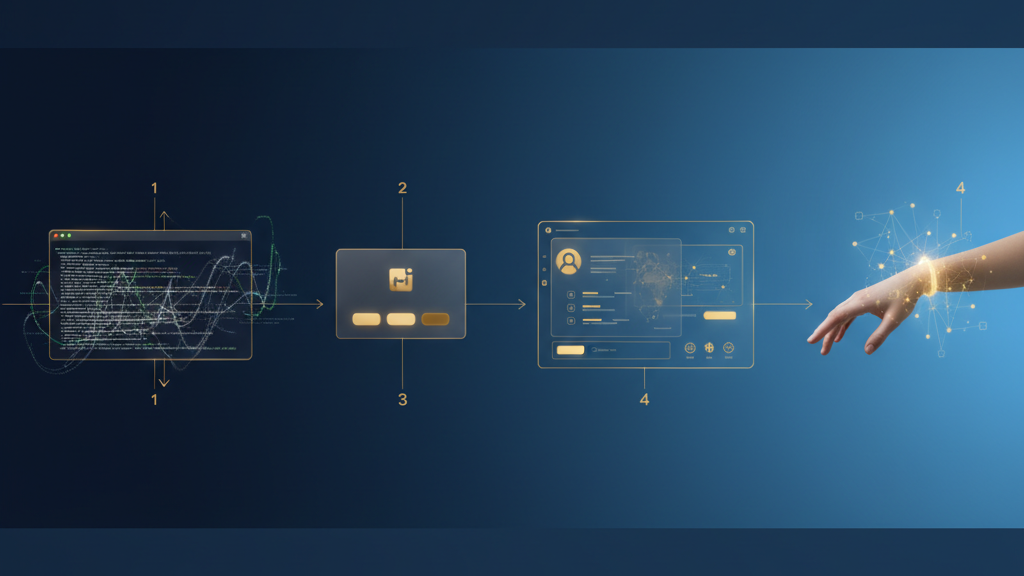
Technology adoption follows four predictable stages. The tools change. The interfaces evolve. But the pattern never does.
Stage 1: Early (Fun for Techies)
The earliest adopters aren't using finished products. They're assembling them from parts. Python scripts. Command-line interfaces. GitHub repos with "experimental" in the README. The value is obvious to people who can see past the friction. For everyone else? It's frustrating noise.
Think about AI agents 18 months ago. If you wanted an AI assistant, you were spinning up Python scripts, managing API keys manually, and debugging rate limits at 2 AM. No UI. Technical knowledge required. Limited use cases that only made sense if you already understood what LLMs could do.
Examples from this stage: Early automation scripts, Clawdbot/Moltbot prototypes, the first OpenClaw builds. If you weren't technical, you weren't in.
Stage 2: Pre-Mass Adoption (We Are Here)
This is where simple UIs appear. The technical knowledge is still preferred, but not absolutely required. The core use cases have been validated. The products work reliably enough that non-technical users can get value—if they're willing to learn.
Right now, in February 2026, we're here. ChatGPT exists. Claude Code exists. OpenClaw works. If you're motivated, you can deploy an AI agent without writing code. But you still need to understand prompts, context windows, and token budgets. The tools are usable. They're not yet invisible.
This stage doesn't last long. Maybe 12 months. Maybe 18. The gap between "technical knowledge preferred" and "technical knowledge optional" closes fast once the market figures out what people actually want to do with these tools.
Stage 3: Mass Adoption (Coming Fast)
Full-featured UIs. Technical knowledge becomes optional. The number of supported use cases explodes because the interface no longer requires users to understand how the system works underneath.
We're not there yet, but the pieces are visible. Claude CoWork isn't released, but it's coming. OpenClaw hasn't been acquired by OpenAI yet, but the partnership conversations are real. When Stage 3 hits, every knowledge worker will have an AI agent the same way every knowledge worker today has email.
Stage 4: Ubiquity (The UI Disappears)
The interface becomes so common, so embedded, that users stop thinking about it. Swipe gestures. Voice commands. Wearables. The agent acts proactively based on purpose, capability, and permissions. You don't ask it to do things. It knows what you need before you ask.
We're years away from this. But it's the inevitable endpoint of the curve we're on. And the organizations that prepare during Stage 2 will own Stage 4. The ones that wait for Stage 3 will be playing catch-up forever.
Why This Matters Right Now
Here's the problem: Most DMOs are waiting for Stage 3 to figure out what AI means for their organization. That's a mistake. By the time the tools are easy enough for mass adoption, the strategic decisions will have already been made—by your competitors.
The window to prepare is now. Not when the UI is polished. Not when the use cases are obvious. Now, while the tools still require effort to deploy, is when you figure out what your organization actually needs AI to do.
How to Prepare for Mass Adoption
If you're serious about being ready when Stage 3 hits, there are two categories of work that matter.
1. Critical Elements
These are the foundational capabilities your organization needs in place before AI agents become ubiquitous.
- Deep understanding of core systems. You need to know how your business model actually works—not the org chart version, the real version. What data flows where? What decisions depend on what inputs? AI agents will automate workflows you didn't know existed. If you don't understand your own systems, you can't direct the automation intelligently.
- Critical IP that must be maintained and enriched. What knowledge does your organization own that can't be replicated by scraping the web? Your member relationships. Your quality curation. Your hyperlocal expertise. Identify it now. Document it now. Because once AI agents commoditize everything else, this is all you'll have left to differentiate on.
- World-class data instrumentation. If you're not measuring it, you can't improve it. And if you can't improve it, an AI agent can't optimize it. Install the tracking. Build the dashboards. Get comfortable with data-driven decision making before you hand decisions over to machines.
- Access to abundant tokens. This one sounds strange until you think about it. Token budgets will become the new computing budget. The organizations that can afford to run AI agents at scale will outpace the ones rationing API calls. Token bonuses and priority access will be the new employee perk. Plan for it.
2. Embedded Agentic Support Networks
This is about culture as much as technology. You're not just deploying tools. You're changing how work gets done.
- Match high-impact team members with agentic orchestrators. Don't give everyone an AI agent and hope for the best. Identify your highest-leverage people—the ones whose output multiplies across the organization—and equip them first. Give them token budgets. Give them priority access to key data. Let them prove the model works.
- Make standardized agents available across the enterprise. Finance needs different tools than HR. HR needs different tools than Facilities. Build the agents. Document the use cases. Make them available as internal services so teams aren't reinventing the same workflows in parallel.
- Embed skill capture in your workflow. Skills are currency for agents. Every time someone solves a novel problem, that solution should be captured, documented, and made available for the next person who encounters the same challenge. This doesn't happen automatically. You need to design the workflow to surface and preserve expertise.
The Clock Is Running
We're in Stage 2 right now. The tools work. The use cases are proven. The interface is still rough enough that most organizations are waiting for it to get easier.
That's the window. The organizations that use this time to prepare—to understand their systems, protect their IP, instrument their data, and build agentic support networks—will own Stage 3.
The ones that wait for the UI to improve will spend Stage 3 playing catch-up. And by Stage 4? They won't even be in the game.
The question isn't whether AI agents will transform your industry. The question is whether you'll be ready when they do.